The Saturated Fat You Eat Is Not the Saturated Fat in Your Arteries: How Carbohydrates Shape Heart Risk
The Saturated Fat You Eat Is Not the Saturated Fat in Your Arteries: How Carbohydrates Shape Heart Risk
During holidays, celebrations, and social gatherings, people often enjoy foods rich in saturated fat—roast meats, eggs, butter, cheese, and traditional dishes shared with family and friends. Almost immediately afterward, many feel guilty, believing they have harmed their heart or clogged their arteries. That guilt, however, is not supported by solid metabolic science. In fact, much of what we have been taught for decades about saturated fat and heart disease is incomplete—and in important ways, backward. Surprisingly, a significant portion of the saturated fat found in our blood vessels, liver, and arteries does not come directly from the saturated fat we eat, but from carbohydrates and sugars that our own bodies convert into fat [1–3].
This distinction is critical. It changes how we think about food, cholesterol, weight gain, and cardiometabolic disease. It also helps explain why many individuals who carefully avoid saturated fat still develop insulin resistance, elevated triglycerides, fatty liver disease, and cardiovascular risk [4].
For many years, nutrition advice followed a simple rule: eat fat—especially saturated fat—and you store fat. Eat less fat, and you protect your heart. This framework shaped dietary guidelines for generations. Yet during the same period when dietary fat intake declined, rates of obesity, type 2 diabetes, and metabolic disease increased dramatically [5]. This contradiction forced researchers to reconsider whether saturated fat itself was the primary driver of disease.
The human body does not function like a storage container where food remains unchanged. It is a dynamic metabolic system in which nutrients are broken down, transformed, oxidized, or stored depending on hormonal signals. The dominant hormone governing this process is insulin [6].
Insulin is often described as a blood sugar hormone, but its role is far broader. Insulin acts as a master regulator of fuel partitioning, determining whether energy is stored or burned. When insulin levels are elevated, fat oxidation is suppressed and fat storage is promoted. When insulin levels fall, stored fat becomes accessible for energy use [6,7]. Chronic elevation of insulin—commonly driven by refined carbohydrates, sugar, frequent eating, alcohol, stress, and sleep disruption—leads to insulin resistance, a central feature of cardiometabolic disease [7,8].
Importantly, insulin resistance is not synonymous with diabetes. It frequently develops years or decades before abnormalities in fasting glucose or hemoglobin A1c appear [7]. Many individuals with “normal” routine lab values already have elevated insulin levels driving hepatic fat production, dyslipidemia, and inflammation beneath the surface [8].
The liver sits at the center of this metabolic process. Nearly all absorbed nutrients pass through the liver, which determines whether they are used immediately, stored, or transformed. However, the liver does not make these decisions autonomously. It responds to hormonal signals—primarily insulin. A useful analogy is to think of insulin as the foreman and the liver as the factory. The liver executes the instructions it receives [6].
When carbohydrates are consumed, they are digested into glucose. Some glucose is used immediately for energy, and some is stored as glycogen in the liver and skeletal muscle. Glycogen storage, however, is limited. Once these stores are full, excess glucose becomes potentially harmful. To prevent hyperglycemia, insulin signals the liver to convert excess carbohydrate into fat through a process known as de novo lipogenesis [1,9].
This pathway evolved as a survival mechanism, allowing humans to store energy efficiently during periods of abundance. A clear illustration of this biology exists in nature. In the fall, bears intentionally consume large amounts of sugar from berries and honey. This seasonal carbohydrate load raises insulin, activates hepatic fat production, and slows metabolism so energy can be stored for hibernation. This is not pathological—it is adaptive physiology. The problem in modern Western society is that humans are unknowingly running this same biological program continuously. Constant access to sugar, refined carbohydrates, sweetened beverages, and frequent eating keeps insulin persistently elevated and continuously instructs the liver to store fat and conserve energy. Unlike bears, humans do not hibernate. Instead, this chronic activation of a seasonal fat-storage pathway results in insulin resistance, fatty liver disease, obesity, and cardiometabolic illness [6–8].
A crucial but often overlooked detail is the type of fat produced by the liver during de novo lipogenesis. When excess carbohydrates are converted into fat, the liver primarily synthesizes the saturated fatty acid palmitic acid (16:0) [1,9,10]. This means that saturated fat accumulating in the bloodstream and tissues often originates endogenously, rather than being directly consumed in the diet. In many cases, it is carbohydrate intake—acting through insulin—that drives the presence of saturated fat in arteries and organs [1–3].
Not all carbohydrates behave the same way, and fructose warrants special attention. Fructose, found in sucrose, high-fructose corn syrup, fruit juice, sweetened beverages, desserts, and alcohol, is metabolized almost entirely by the liver. Unlike glucose, fructose bypasses key regulatory steps and feeds directly into lipogenic pathways [2,3,11]. This makes fructose a potent driver of hepatic fat accumulation, hypertriglyceridemia, and insulin resistance [2,3,11].
Modern fructose exposure far exceeds historical norms. Current estimates suggest average daily fructose intake of 50–75 grams, with many individuals exceeding 100 grams per day. One hundred years ago, intake was closer to 10–20 grams daily, largely from whole fruit. In pre-industrial populations, fructose exposure was likely closer to 5–10 grams per day and seasonal rather than continuous [11,12]. Human physiology has not adapted to this level of chronic exposure.
This does not imply that whole fruit is harmful. Whole fruit contains fiber, water, and phytonutrients that slow absorption and reduce metabolic stress. The problem lies in liquid sugars, refined carbohydrates, and high-frequency exposure. In metabolism, frequency and form matter as much as quantity [3,11].
These mechanisms highlight a critical distinction: dietary saturated fat and endogenously produced saturated fat are metabolically different. When insulin levels are low and metabolic flexibility is preserved, dietary fat—including saturated fat—can be oxidized for energy or incorporated into normal cellular structures. When insulin levels are chronically elevated, carbohydrates are converted into saturated fat and stored, even when dietary fat intake is modest [1,6].
This framework also explains why cholesterol measurements can be misleading when viewed in isolation. Cardiometabolic risk correlates more strongly with triglycerides, HDL cholesterol, insulin levels, inflammatory markers, and lipoprotein dynamics than with total cholesterol alone [4,8,13].
The encouraging news is that this process is often reversible. Reducing carbohydrate load—particularly refined carbohydrates and sugars—lowers insulin levels, suppresses de novo lipogenesis, reduces liver fat, improves triglycerides, and restores metabolic flexibility, often before significant weight loss occurs [2,14].
At CardioCore Metabolic Wellness Center, cardiac and metabolic health are approached through a holistic, science-based, precision medicine framework. Nutrition is evaluated in the context of insulin signaling, lipid metabolism, mitochondrial function, inflammation, hormonal balance, and genetic predisposition. Two individuals can eat the same meal and experience very different metabolic outcomes. Understanding those differences is the foundation of intelligent prevention and care.
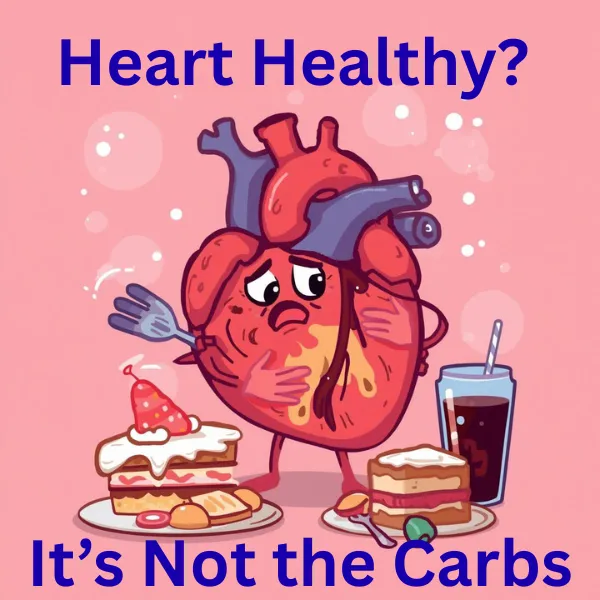
The central takeaway is clear: the saturated fat found in arteries often comes from carbohydrates, not from the saturated fat we eat. Cardiometabolic disease is driven less by dietary fat itself and more by insulin resistance, hepatic fat production, and chronic metabolic overload. True cardiac and metabolic wellness comes from understanding how the body processes nutrients and making informed, individualized decisions grounded in physiology rather than fear.
Being healthy is not an accident. It is the result of awareness, insight, and thoughtful design.
References
Parks EJ, Hellerstein MK. Carbohydrate-induced hypertriglyceridemia: Historical perspective and biological mechanisms. Am J Clin Nutr. 2000;71:412–433.
Schwarz JM, et al. Effect of dietary fructose restriction on liver fat, de novo lipogenesis, and insulin resistance. J Clin Invest. 2017;127:695–708.
Stanhope KL, et al. Consuming fructose-sweetened beverages increases visceral adiposity and lipids. J Clin Invest. 2009;119:1322–1334.
Samuel VT, Shulman GI. Mechanisms of insulin resistance. Cell. 2012;148:852–871.
Mozaffarian D, et al. Dietary fats and cardiovascular disease. N Engl J Med. 2010;362:186–187.
Reaven GM. Role of insulin resistance in human disease. Diabetes. 1988;37:1595–1607.
DeFronzo RA. Pathogenesis of type 2 diabetes mellitus. Med Clin North Am. 2004;88:787–835.
Eckel RH, et al. The metabolic syndrome. Lancet. 2005;365:1415–1428.
Hudgins LC. Dietary carbohydrate and fatty acid synthesis. Curr Opin Lipidol. 2000;11:1–6.
Aarsland A, et al. Hepatic lipogenesis in humans. J Clin Invest. 1997;99:2008–2017.
Lustig RH. Fructose: Metabolic, hedonic, and societal parallels with ethanol. J Am Diet Assoc. 2010;110:1307–1321.
Bray GA, et al. Consumption of high-fructose corn syrup. Am J Clin Nutr. 2004;79:537–543.
Ference BA, et al. Low-density lipoproteins and cardiovascular risk. JAMA. 2017;318:947–956.
Petersen KF, et al. Reversal of hepatic insulin resistance. Diabetes. 2005;54:603–608.
Click here to book a discovery call
Click here to join our private community
Click here to speak with our CardioMetabolic virtual assistant
