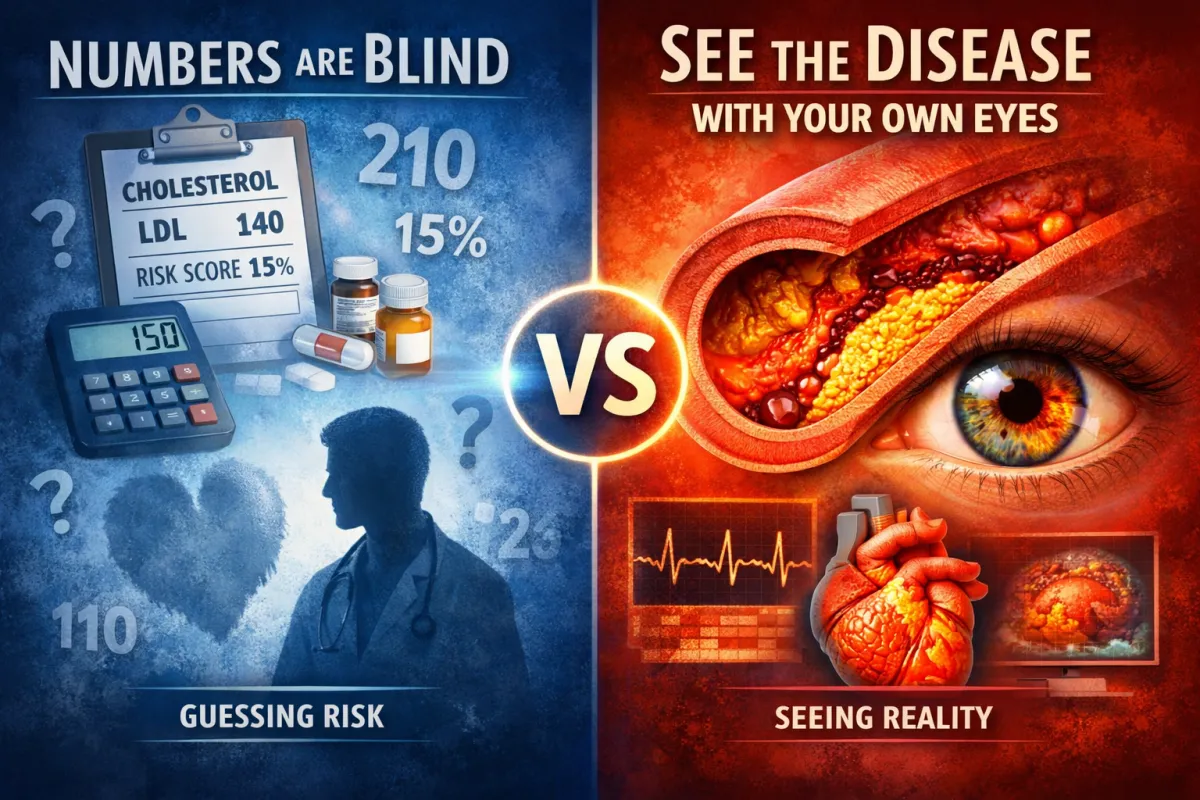
Looking at the Heart to Guide Treatment: Why Imaging Must Come Before Medication
Looking at the Heart to Guide Treatment: Why Imaging Must Come Before Medication
“Why Seeing the Artery Matters More Than Measuring the Blood”
Dr John Sciales
Director: CardioCore Metabolic Wellness Center
Abstract
This article is written for those who have been started on cholesterol medication based on a blood test, without ever having their heart evaluated .
For years, patients have been told their cholesterol is “too high” and that medication is necessary, yet no imaging was performed to determine whether atherosclerosis actually exists within the arteries. This approach treats numbers, not people. It assumes disease rather than identifying it .
Today, we have the ability to change that… Now, That Is the Official Recommendation.
Modern cardiovascular guidelines from the American College of Cardiology and the American Heart Association increasingly emphasize coronary artery calcium (CAC) scoring to guide treatment decisions, moving away from treating cholesterol numbers alone and toward identifying disease directly within the artery wall [3–5,12,19].
A CAC score of zero is associated with very low short- to intermediate-term cardiovascular risk, typically over the next three to five years, and supports deferring statin therapy in many individuals when no other high-risk conditions are present [3–5,19–21]. In essence, no disease, no medication… but the numbers are not ignored. This is not dismissal of risk; it is contextualization of risk.
Instead, this becomes a strategy of informed surveillance. Repeat imaging is both appropriate and recommended, typically within 3 to 7 years, depending on the individual’s risk profile, progression potential, and evolving clinical context [5,18–20].
This is not inaction. This is precision.
CAC answers a simple question: Is disease present?
It is a safe, fast, and non-invasive test, often easier than a blood draw, and it allows us to move from guessing to knowing.
“This represents a fundamental shift, from estimating risk to confirming disease.”
The Biology of Atherosclerosis: A Disease That Takes Decades
Atherosclerosis develops over a long period of time, often decades, beginning with blood vessel wall called the endothelial dysfunction and then with lipid accumulation, progressing through inflammation and then plaque formation, and only later becoming calcified [1,2,22].
By the time calcium appears, earlier stages of disease have already occurred.
Although heart attacks are often described as “sudden,” the disease that causes them is anything but. Atherosclerosis develops over decades, evolving silently within the artery wall. When we follow established guidelines and actually look at the heart, the concept of a “sudden heart attack” should largely disappear from our vocabulary. What is often labeled as sudden is, in reality, disease that went unrecognized, because it was never directly looked for [1,2,22].
Why a “Normal” Stress Test Does Not Mean You Don’t Have Heart Disease
For decades, Stress Testing has been used as a primary tool to evaluate coronary artery disease. While it has a role, it is critical to understand what it actually measures, and what it does not .
A Stress Test does not look at the artery wall. It does not identify plaque. It does not measure plaque burden or determine whether plaque is stable or unstable. It evaluates blood flow to the heart muscle under stress.
In practical terms, it detects advanced disease, typically when a coronary artery is narrowed by about 70% or more.
But most heart attacks do not occur at this stage.
A large body of evidence shows that the majority of myocardial infarctions, >2/3, arise from plaques causing less than 50% narrowing [13,23,24]. These plaques are biologically active and prone to rupture, yet they often do not limit blood flow enough to be detected by stress testing.
This creates a critical gap. A patient may be told their stress test is “normal,” yet still have significant disease within the artery wall. A false sense of security. The more accurate wording should be that “you do not have plaque causing rate limiting flow, often >70%”.
One of the most well-known examples is Tim Russert, who had a reported LDL cholesterol level below 70 mg/dL and a normal stress test, yet suffered a fatal myocardial infarction just six weeks later due to plaque rupture. His case reflects the underlying biology of the disease. When you don’t look, you don’t find and assumptions can have fatal consequences.
A normal stress test does not mean the absence of meaningful heart disease, it only rules out advanced obstruction… and sometimes it will miss that if is diffuse and symmetrical.
“In summary, a normal stress test does Not mean a normal heart.”
Cholesterol: Essential, Yet Misunderstood.
“Cholesterol is Not the Enemy”
Cholesterol is not inherently harmful.
Every cell membrane in the body depends on cholesterol. It is essential for building cell membranes, producing hormones such as testosterone, estrogen, cortisol, and DHEA, and forming bile acids necessary for digestion. It also plays a role in energy production, called ubiquinone or Co-Q10, and cellular communication [25–27].
So the question is not simply whether cholesterol is high. We then ask the most vital question.
Is Your Cholesterol Harmful or Not?
That question cannot be answered by a blood test alone.
Many individuals have elevated cholesterol levels yet show no evidence of atherosclerosis. In these cases, cholesterol is not acting in a harmful way, it is not oxidized, not inflamed, and not driving plaque formation within the artery wall. This highlights a critical point: cholesterol itself is not the disease. It is the behavior of cholesterol within a specific biological environment that determines risk [6–8,25].
In fact, there is evidence that in certain populations, particularly older adults, higher cholesterol levels are associated with longer survival, while very low cholesterol is linked to frailty and chronic disease [28,29].
In younger and middle-aged populations, the relationship is different. Higher LDL cholesterol is generally associated with increased cardiovascular risk, but even here the relationship is not absolute [30].
This has led to the recognition of a U-shaped relationship between cholesterol and mortality [28–30].
What explains this variability?
In some individuals, higher cholesterol reflects a state of better metabolic reserve, stronger nutritional status, and more robust physiology. In others, it reflects an adverse metabolic environment characterized by inflammation, insulin resistance, and oxidative stress, conditions that promote plaque formation and instability [6–8].
This is why cholesterol alone cannot define disease.
Cholesterol numbers alone should not trigger a knee-jerk decision to initiate lifelong drug therapy.
Even more importantly, in the presence of established cardiovascular risk factors, a “normal” cholesterol level is not reassuring [3–5,31].
High cholesterol does not equal disease.
Low cholesterol does not guarantee protection.
“Cholesterol suggests risk. Imaging defines disease. Plaque reveals biology”.
From Numbers to Imaging: A Necessary Shift
For years, the question “What is your cholesterol?” became part of everyday conversation . Much of this shift occurred during the era when statin therapy, particularly with the widespread introduction of atorvastatin (Lipitor), was heavily promoted in commercial ads directed to both physicians as well as the general population. During this time, cholesterol numbers became the dominant language of cardiovascular care. This shift was influenced not only by scientific advancement, but also by large-scale public messaging and pharmaceutical marketing [1,2].
Over time, cholesterol became so emphasized that it was often treated as the disease itself, rather than as one piece of a much larger and more complex biological process [3–5].
In doing so, this narrow focus inadvertently obscured other critical drivers of cardiovascular disease, including inflammation, insulin resistance, metabolic dysfunction, and plaque biology within the artery wall [6–9].
“In many ways, cholesterol did not just become a risk marker, it became a surrogate for the disease itself, replacing the need to actually look for the disease.”
But numbers estimate risk, they do not define disease [10].
Today, we must ask a better question:
“What does your heart actually look like?”
Because unlike medications, which can be standardized and broadly applied, the presence of disease must be directly identified. It cannot be assumed, simplified, or reduced to a single number.
CAC and CCTA: Seeing the Disease
Coronary artery calcium (CAC) scoring identifies whether calcified plaque is present. It is the first step in determining whether atherosclerosis exists [11–13].
A CAC score of zero is associated with very low short- to intermediate-term cardiovascular risk, typically over the next three to five years, and has been consistently shown to reclassify risk and guide therapy decisions [11–14]. In contrast, a higher score, particularly when elevated relative to age and sex percentiles, reflects a greater burden of disease and should prompt further evaluation [12–14].
However, CAC has important limitations. It detects only calcified plaque and does not identify non-calcified or “soft” plaque, which may be more biologically active and potentially unstable [15].
Coronary CT angiography (CCTA) takes evaluation a step further. Unlike calcium scoring alone, CCTA uses intravenous contrast to directly visualize the artery wall, allowing for the identification of both calcified and non-calcified plaque, measurement of total plaque burden, and characterization of plaque composition [16–18]. This level of detail provides critical information that cannot be obtained from a stress test.
CCTA answers essential questions: Is coronary artery disease present? What is the true extent of that disease? What type of plaque is present, and how biologically active or unstable might it be? These insights begin to inform not only risk, but also future treatment strategies [16–18].
In contrast, a Stress Test answers a much narrower question: Is there a flow-limiting obstruction? It does not identify plaque, does not measure plaque burden, and does not assess plaque biology. As a result, it often detects disease only in its later stages, when significant narrowing has already occurred [19,20].
Perhaps this is why heart attacks are still labeled “sudden” and “unexpected”, not because they are, but because the disease was never truly looked for [21].
This distinction is fundamental.
CAC answers the question: Is disease present?
CCTA answers the question: What does that disease actually look like?
Together, they shift our approach from estimating risk to directly understanding disease.
When CCTA is combined with advanced computational analysis such as fractional flow reserve derived from CT (FFR-CT), it can further determine whether a specific lesion is functionally significant, that is, whether it is actually limiting blood flow and may require intervention [22,23]. Importantly, FFR-CT has demonstrated a very high negative predictive value, often reported in the range of approximately 90–95%, for ruling out lesions that would require revascularization [22,23]. This is more accurate than Stress Testing when evaluating the need for further invasive testing called Coronary Catheterization or Angiograms.
This allows clinicians to move beyond anatomy alone and integrate both structure and function into decision-making.
“This is no longer guesswork. This is precision.”
Beyond Cholesterol: What the EVAPORATE Trial Revealed About Plaque Biology
The EVAPORATE trial in 2020 provided critical insight into plaque biology through the use of serial coronary CT angiography imaging(CCTA) [24]. Unlike traditional studies that rely on surrogate markers such as LDL cholesterol levels, the EVAPORATE Trial directly evaluated how therapies affect coronary artery disease within the artery wall itself.
The findings were both striking and highly informative.
Patients on stable, high-intensity statin therapy continued to demonstrate progression of coronary plaque over time. Specifically, fibrofatty plaque increased by approximately 32%, and low-attenuation plaque, considered the most biologically active and high-risk plaque associated with future cardiovascular events, increased by 109% [24], more than doubling.
In contrast, when icosapent ethyl, a highly purified Omega 3 EPA fatty acid, was added to statin therapy, the results were markedly different. Fibrofatty plaque decreased by 34%, and low-attenuation plaque decreased by 17% over the same time period [24].
Importantly, icosapent ethyl does not significantly lower LDL cholesterol. Its benefit appears to be driven largely through anti-inflammatory and plaque-stabilizing effects, including modulation of inflammatory signaling pathways such as NF-κB, which plays a central role in vascular inflammation and atherogenesis [8,14].
This is not the same as over-the-counter omega-3 supplements. Icosapent ethyl is a highly purified, pharmaceutical-grade eicosapentaenoic acid (EPA) with consistent bioavailability and demonstrated clinical and imaging outcomes [9,14].
A useful analogy is this: just as jet fuel is a highly refined, high-performance product derived from crude oil, icosapent ethyl is a purified, biologically active derivative of omega-3 fatty acids, engineered to deliver targeted effects that standard supplements cannot replicate.
This was a profoundly eye-opening observation.
For the first time, we were able to see, directly within the artery wall, that therapies which do not meaningfully change cholesterol levels can still improve plaque characteristics in a clinically meaningful way.
This challenges the long-standing assumption that lowering LDL cholesterol alone is sufficient to alter the course of atherosclerotic disease [25–27]. The implications are significant.
Lowering cholesterol, while important, does not fully address plaque biology. Even with aggressive LDL reduction, plaque may continue to evolve, and in some cases, high-risk plaque features may still progress [25–27].
Increasing evidence suggests that statins exert important anti-inflammatory effects, particularly through modulation of inflammatory pathways such as NF-κB, which may contribute significantly to their clinical benefit [6,28].
This perspective aligns with contemporary cholesterol guidelines, which emphasize statin intensity and percentage reduction rather than achieving a specific LDL target, reflecting a broader understanding of cardiovascular risk beyond cholesterol concentration alone [1,2].
What the EVAPORATE Trial ultimately reveals is a deeper truth:
“Atherosclerosis is not simply a cholesterol problem, it is a biological process driven by inflammation, metabolic dysfunction, and the behavior of plaque within the artery wall”.
Inflammation and metabolic health determine whether plaque stabilizes, regresses, or progresses toward rupture [6–9].
This is why imaging matters.
“Because only by looking at plaque directly can we begin to understand whether our therapies are truly working.”
Beyond Cholesterol: Understanding the Drivers of Disease
Once plaque is identified, the goal is not simply to lower cholesterol, it is to understand what is driving the disease.
Atherosclerosis is not a single-variable condition. It is the result of multiple interacting biological processes that evolve over time within the artery wall, including insulin resistance, chronic inflammation, oxidative stress, and metabolic dysfunction [6–9,28–30].
Among these, insulin resistance plays a central and often underrecognized role. It frequently begins years, if not decades, before the development of overt diabetes. During this time, elevated insulin levels and impaired glucose utilization create a pro-inflammatory, pro-atherogenic environment that accelerates plaque development [7,29,30].
Importantly, insulin resistance is often missed by standard testing. Studies published in the American Journal of Cardiology have demonstrated that in patients with established coronary artery disease and “normal” glucose levels, an oral glucose tolerance test (OGTT) reveals abnormal glucose metabolism in up to 88% of individuals [23,31]. This is the same physiologic challenge test routinely used in pregnancy, yet rarely applied in cardiometabolic evaluation.
Despite this, clinical practice continues to rely heavily on static measurements such as fasting glucose and HbA1c, which often fail to detect early metabolic dysfunction. In all my years, I have never seen a cardiologist order an OGTT in this context. Instead, they continue to depend on isolated numbers that provide only a snapshot, not the full metabolic picture.
It is worth pausing on this. A dynamic test, published in one of the most respected cardiology journals, capable of uncovering hidden metabolic disease in the vast majority of patients with coronary artery disease, remains almost entirely absent from routine cardiovascular care.
Let me say that again clearly: a test that can identify early, clinically meaningful metabolic dysfunction in up to 88% of patients, while their standard labs appear “normal”, is simply not being used.
And I would challenge this directly: if anyone reading this has ever been sent by their cardiologist for an oral glucose tolerance test in this context, I would genuinely like to hear from you, I will personally commend that physician.
Because this is not a fringe concept.
This is published science.
This is available medicine.
Yet it remains overlooked.
And that gap, between what we know and what we do, is where disease continues to progress silently.
This is the difference between looking at a photograph and watching a movie.
Chronic low-grade inflammation further sustains disease progression. Activation of inflammatory pathways such as NF-κB contributes to plaque instability and helps explain why cardiovascular events occur even when traditional markers appear “controlled” [6,28].
Oxidative stress modifies lipoproteins, particularly LDL, increasing their atherogenicity and retention within the arterial wall [32].
Additional contributors include hormonal dysregulation, chronic stress physiology, and autonomic imbalance, all of which reinforce insulin resistance and inflammatory signaling [33,34].
Emerging evidence also highlights the role of the gut microbiome, with metabolites such as trimethylamine N-oxide influencing vascular inflammation and atherosclerosis [35,36].
Taken together, these processes define the cardiometabolic environment—the internal terrain that determines whether plaque stabilizes, progresses, or becomes unstable.
This is why focusing on cholesterol alone is insufficient.
The lumen is not the disease.
The disease is within the artery wall, and within the biology that drives it.
Radiation and Safety
Radiation exposure is often a concern when discussing imaging, but it is important to understand its scale and context.
Radiation is measured in millisieverts (mSv). The average annual background exposure is approximately 3 mSv [37]. A mammogram exposes patients to approximately 0.7–1 mSv. A CAC scan delivers about 1 mSv. CCTA typically delivers approximately 1–1.5 mSv with modern protocols [37,38].
In contrast, nuclear stress testing exposes patients to approximately 9–14 mSv [37].
When viewed in this context, CAC and CCTA represent low-radiation tools that provide direct insight into coronary disease.
We readily accept higher radiation exposure to detect late disease, yet hesitate to use lower-radiation tools that detect disease early, when intervention is most effective.
“The greater danger is not the radiation. The greater danger is missed disease.”
Look Before You Treat
For decades, treatment decisions in cardiovascular medicine have been driven by blood tests, most notably cholesterol levels . These numbers were used to estimate risk and guide therapy, often leading directly to the initiation of lifelong medication without ever confirming whether disease was actually present [3–5,12].
But a number is not a diagnosis.
Cholesterol, risk calculators, and laboratory values do not measure disease, they estimate risk. They are indirect signals, not direct evidence. They attempt to predict what may be happening within the artery wall, but they do not show it [10,16].
“We are no longer treating numbers, we are treating disease.”
This is where the paradigm is changing.
A patient should not be treated simply because their cholesterol is elevated. They should be treated when elevated cholesterol is associated with actual atherosclerotic disease [3–5,17]. Without confirming disease, we risk treating individuals who may never benefit, while missing others who are at real risk despite “normal” numbers [13,17]. Now this is guideline driven.
This is precisely why contemporary guidance from the American College of Cardiology and the American Heart Association in 2026 increasingly emphasizes imaging, particularly coronary artery calcium (CAC) scoring, to clarify risk and guide decision-making [3–5,18–20].
Because the truth is, we often do not know what a number means until we look.
If cholesterol is elevated, we should look.
If risk factors are present, we should look.
If there is metabolic dysfunction, family history, or clinical concern, we should look.
And even when numbers appear “normal,” but the biology suggests otherwise, we should still look [6–9].
Every road leads to the same conclusion.
“We must look before we treat.”
Because once we look, the entire conversation changes.
If no disease is present, we may defer therapy and avoid unnecessary lifelong medication [3–5,19]. If disease is present, treatment becomes targeted, justified, and often more urgent [13,17]. This is the shift from population-based assumptions to individualized care. From probability to reality. From treating numbers… to treating disease. Before reaching for the prescription pad, we should be asking a more fundamental question:
What does the heart actually look like?
For too long, the conversation has been “What is your cholesterol?” It’s time to change that, to “What does your heart look like?” Because no one should be placed on lifelong therapy without first knowing whether disease is actually present.
Building the Digital Lens: From Detection to Precision Care
We are entering a new era in cardiovascular medicine, one where disease is no longer guessed at, but directly seen, measured, and understood .
For years, we practiced in the dark, relying on numbers, estimates, and probability. Today, we have the ability to turn the lights on [11,16].
CAC is the first lens. It tells us if disease is present [3–5,18].
CCTA is the second lens. It shows us what that disease actually looks like [16,21].
Plaque biology is the third lens. It reveals how that disease behaves [14,22].
Together, they create a digital understanding of cardiovascular disease, one that replaces assumption with clarity, and guesswork with precision [16,21,22].
Blood tests and Stress Testing does none of this.
This is no longer theoretical. This is available now. And it changes everything.
Instead of asking, “What is your cholesterol?” we must begin asking a more meaningful question:
What is happening inside your arteries?
Because that is where the truth lives. This is the shift, from treating numbers to treating biology. From population-based estimates to individualized care. From reacting to disease… to identifying it early and changing its course [3–5,16]. And once you see the disease, you can no longer ignore it. A picture is worth a thousand words.
This is your opportunity, to stop guessing, to stop assuming, and to finally understand what is happening inside your own body.
Because the most important question is no longer: “What is your cholesterol?”
It is: What does your heart actually look like? See the disease. Understand the biology. Change the outcome.
Beyond Detection: A More Complete Approach
Once disease is identified, the opportunity truly begins. Atherosclerosis is not fixed. It is dynamic, and its course can be changed [1,2,6]. But that change does not come from a single prescription, it comes from understanding what is driving the disease in the first place.
This is where traditional models often fall short. Too often, the approach becomes reflexive: see cholesterol, treat cholesterol, repeat in six months. But cardiovascular disease does not begin in the lab report, it begins in the biology that shapes how your body functions over time [6–9].
If we are serious about changing outcomes, we must ask a more important question:
“Why is this happening… and what do we do about it?”
Because without understanding the “why,” treatment will always be incomplete.
At CardioCore Metabolic Wellness Center, we take a more complete approach, one that looks deeper. We evaluate insulin resistance through dynamic testing, often uncovering dysfunction long before diabetes is diagnosed [7,23]. We assess hormonal balance, including cortisol, thyroid function, and sex hormones, all of which influence metabolism, inflammation, and vascular health [24,25].
We explore DNA analysis for genetic predispositions, not as destiny, but as insight, helping us understand how your body processes nutrients, manages inflammation, and responds to environmental stressors. We examine detoxification pathways, mitochondrial energy production, and fuel utilization, revealing how efficiently your body creates and uses energy [26–28].
We also look beyond the bloodstream to the gut microbiome, recognizing its role in inflammation, metabolic signaling, and cardiovascular risk [29,30].
And then, we bring all of this together.
Through targeted nutrition.
Through personalized supplementation.
Through movement and exercise strategies.
Through sleep optimization.
Through stress regulation and recovery.
Through social connection and purpose.
This is not alternative care. This is comprehensive care.
This is precision medicine applied to the individual, not the population.
Because the reality is this:
“You cannot fully treat heart disease if you do not understand what is driving it, and you cannot understand what is driving it without looking deeper.”
Final Perspective
We are no longer treating the population, we are treating the individual . We are no longer estimating risk, we are seeing disease. But seeing the disease is only the beginning.
Understanding it… is what changes everything.
Cholesterol suggests risk.
Imaging defines disease.
Plaque reveals biology.
Biology guides treatment.
And when biology guides treatment, outcomes change.
If you truly want to understand your risk… If you want to know not just if disease is present, but why… Then the next step is not another number. It is a deeper evaluation.
Because the future of cardiovascular care is not reactive.
It is precise.
It is personalized.
And it begins by understanding you.
Stop guessing. Start seeing.
Book a Free Discovery Call and Find Out More...
CLICK HERE TO BOOK A DISCOVERY CALL
CLICK HERE TO JOIN OUR PRIVATE CardioCore COMMUNITY
CLICK HERE TO SPEAK TO OUR VIRTUAL ASSISTANT
References
Libby P. Inflammation in atherosclerosis. Nature. 2002;420(6917):868–874. doi:10.1038/nature01323.
Hansson GK. Inflammation, atherosclerosis, and coronary artery disease. N Engl J Med. 2005;352(16):1685–1695. doi:10.1056/NEJMra043430.
Grundy SM, Stone NJ, Bailey AL, et al. 2018 AHA/ACC guideline on the management of blood cholesterol. Circulation. 2019;139(25):e1082–e1143. doi:10.1161/CIR.0000000000000625.
Arnett DK, Blumenthal RS, Albert MA, et al. 2019 ACC/AHA guideline on the primary prevention of cardiovascular disease. Circulation. 2019;140(11):e596–e646. doi:10.1161/CIR.0000000000000678.
Hecht HS, Blaha MJ, Kazerooni EA, et al. SCCT guideline for coronary artery calcium scoring of noncontrast noncardiac chest CT scans: a report of the Society of Cardiovascular Computed Tomography. J Cardiovasc Comput Tomogr. 2022;16(2):e1–e17. doi:10.1016/j.jcct.2021.11.003.
Reaven GM. Banting lecture 1988. Role of insulin resistance in human disease. Diabetes. 1988;37(12):1595–1607. doi:10.2337/diab.37.12.1595.
DeFronzo RA. From the triumvirate to the ominous octet: a new paradigm for the treatment of type 2 diabetes mellitus. Diabetes. 2009;58(4):773–795. doi:10.2337/db09-9028.
Ridker PM, Everett BM, Thuren T, et al. Antiinflammatory therapy with canakinumab for atherosclerotic disease. N Engl J Med. 2017;377(12):1119–1131. doi:10.1056/NEJMoa1707914.
Bhatt DL, Steg PG, Miller M, et al. Cardiovascular risk reduction with icosapent ethyl for hypertriglyceridemia. N Engl J Med. 2019;380(1):11–22. doi:10.1056/NEJMoa1812792.
Nissen SE, Tuzcu EM, Schoenhagen P, et al. Effect of intensive compared with moderate lipid-lowering therapy on progression of coronary atherosclerosis: a randomized controlled trial. JAMA. 2004;291(9):1071–1080. doi:10.1001/jama.291.9.1071.
Nicholls SJ, Tuzcu EM, Sipahi I, et al. Statins, high-density lipoprotein cholesterol, and regression of coronary atherosclerosis. JAMA. 2006;295(13):1556–1565. doi:10.1001/jama.295.13.jpc60002.
Stone NJ, Robinson JG, Lichtenstein AH, et al. 2013 ACC/AHA guideline on the treatment of blood cholesterol. Circulation. 2014;129(25 Suppl 2):S1–S45. doi:10.1161/01.cir.0000437738.63853.7a.
Stone GW, Maehara A, Lansky AJ, et al. A prospective natural-history study of coronary atherosclerosis (PROSPECT). N Engl J Med. 2011;364(3):226–235. doi:10.1056/NEJMoa1002358.
Budoff MJ, Bhatt DL, Kinninger A, et al. Effect of icosapent ethyl on progression of coronary atherosclerosis in patients with elevated triglycerides on statin therapy (EVAPORATE). Eur Heart J. 2020;41(40):3925–3932. doi:10.1093/eurheartj/ehaa652.
Einstein AJ, Moser KW, Thompson RC, et al. Radiation dose to patients from cardiac diagnostic imaging. JAMA. 2007;298(3):317–323. doi:10.1001/jama.298.3.317.
SCOT-HEART Investigators. Coronary CT angiography and 5-year risk of myocardial infarction. Lancet. 2018;392(10151):497–506. doi:10.1016/S0140-6736(18)31167-6.
Sabatine MS, Giugliano RP, Keech AC, et al. Evolocumab and clinical outcomes in patients with cardiovascular disease. N Engl J Med. 2017;376(18):1713–1722. doi:10.1056/NEJMoa1615664.
Blaha MJ, Cainzos-Achirica M, Greenland P. Role of coronary artery calcium score in prevention. J Am Coll Cardiol. 2017;72(4):434–447. doi:10.1016/j.jacc.2017.05.027.
Nasir K, Budoff MJ, Wong ND, et al. Coronary artery calcium and cardiovascular risk assessment. J Am Coll Cardiol. 2015;66(15):1657–1668. doi:10.1016/j.jacc.2015.07.066.
Valenti V, Hartaigh BÓ, Heo R, et al. Long-term prognosis after CAC scoring. JACC Cardiovasc Imaging. 2015;8(8):900–909. doi:10.1016/j.jcmg.2015.03.014.
Douglas PS, Hoffmann U, Patel MR, et al. Outcomes of anatomical versus functional testing for coronary artery disease (PROMISE). N Engl J Med. 2015;372(14):1291–1300. doi:10.1056/NEJMoa1415516.
Cury RC, Abbara S, Achenbach S, et al. CAD-RADS 2.0—Coronary artery disease reporting and data system. J Cardiovasc Comput Tomogr. 2022;16(6):536–557. doi:10.1016/j.jcct.2022.07.002.
Norhammar A, Tenerz Å, Nilsson G, et al. Glucose metabolism in patients with acute myocardial infarction and no previous diagnosis of diabetes. Lancet. 2002;359(9324):2140–2144. doi:10.1016/S0140-6736(02)09089-X.
McEwen BS. Protective and damaging effects of stress mediators. N Engl J Med. 1998;338(3):171–179. doi:10.1056/NEJM199801153380307.
Chrousos GP. Stress and disorders of the stress system. Nat Rev Endocrinol. 2009;5(7):374–381. doi:10.1038/nrendo.2009.106.
Wallace DC. Mitochondrial dysfunction in disease. Science. 1999;283(5407):1482–1488. doi:10.1126/science.283.5407.1482.
Patti ME, Corvera S. The role of mitochondria in the pathogenesis of type 2 diabetes. Endocr Rev. 2010;31(3):364–395. doi:10.1210/er.2009-0027.
Brown MS, Goldstein JL. A receptor-mediated pathway for cholesterol homeostasis. Science. 1986;232(4746):34–47. doi:10.1126/science.3513311.
Tang WHW, Wang Z, Levison BS, et al. Intestinal microbial metabolism of phosphatidylcholine and cardiovascular risk. N Engl J Med. 2013;368(17):1575–1584. doi:10.1056/NEJMoa1109400.
Wang Z, Klipfell E, Bennett BJ, et al. Gut flora metabolism of phosphatidylcholine promotes cardiovascular disease. Nature. 2011;472(7341):57–63. doi:10.1038/nature09922.
