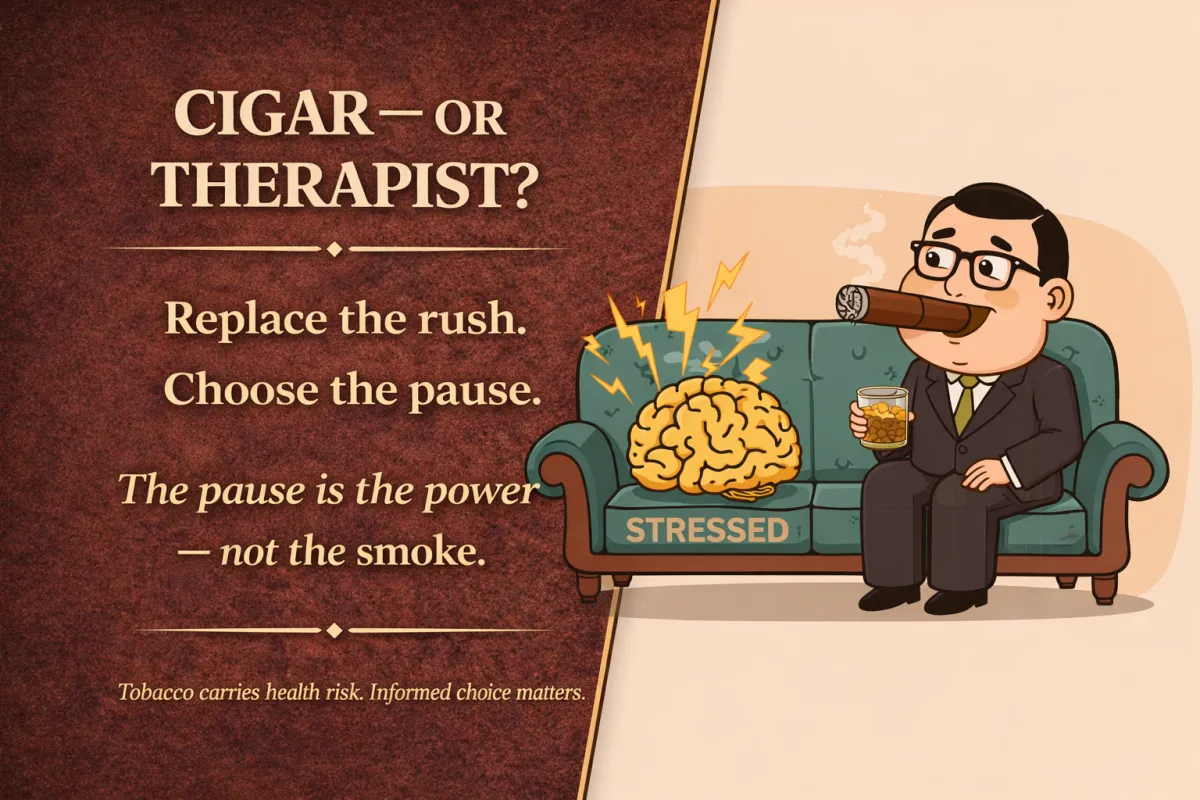
Cigar Moments: Ritual, Reflection & Reality... Not Just an Oral Fixation
💨 Cigar Moments:
... Ritual, Reflection, and Reality
Not Just an Oral Fixation… It’s a Pause Button for Life
A Medical Perspective and Overview
Authors: Dr John Sciales, Dr Diana Castro
Introduction
For centuries, cigars have occupied a unique and often romanticized place in human culture. From drawing rooms and golf courses to post-dinner porches and celebrations, the cigar has symbolized leisure, reflection, and conversation. It’s not just a smoke — it’s a marker of moments.
Cigars have been lit to celebrate life’s milestones: the birth of a child, a wedding, a promotion, a hard-earned victory, or a quiet personal triumph. They’ve accompanied championship toasts like those of Michael Jordan after NBA titles, punctuated history-shaping decisions with figures like Winston Churchill, and became part of the signature style of John F. Kennedy.
In more modern times, the cigar has kept its place in both pop culture and power circles — from Hollywood legends like Arnold Schwarzenegger, Sylvester Stallone, Jack Nicholson, and glamorous icons such as Sharon Stone and Marilyn Monroe, to business leaders and entrepreneurs who use it to mark major deals, celebrate milestones, and create spaces where conversation flows more freely than in boardrooms.
Whether on a championship stage, a red carpet, a back porch, or a corner office, the cigar endures as a symbol of celebration, reflection, and power — a deliberate pause in an accelerated world.
Unlike cigarettes, which are typically inhaled frequently and habitually, cigars are most often smoked slowly, intentionally, and occasionally—often in settings designed for social interaction and unwinding.
Modern medicine is unequivocal: tobacco carries health risks. But context matters deeply. The physiological exposure from occasional, non-inhaled cigar use is not the same as chronic cigarette smoking. At the same time, the psychological and social dimensions of cigar rituals—the slowing of time, the bonding, the sense of place—hold their own significance.
This essay explores both sides of the equation: the realities, the rituals, and the responsibility that comes with the choice to enjoy a cigar in moderation.
1. 🪑 Because Sometimes a Cigar Is More Than Just a Smoke
In a culture that celebrates speed—constant notifications, multitasking, digital noise—the ritual of lighting a cigar represents an act of intentional slowing down.
A single cigar can last anywhere from 30 to 90 minutes. It cannot be rushed. It cannot be multitasked.
The smoke sets its own tempo.
This enforced pause has profound psychological implications. It mirrors structured relaxation practices like mindfulness or meditation, which are known to engage the parasympathetic nervous system and reduce sympathetic overdrive—the same physiological stress pathways that drive hypertension, anxiety, and cardiometabolic risk [1][2].
Rhythmic, paced breathing—similar to the breathing patterns during cigar smoking—has been associated with reductions in stress hormone levels, improved vagal tone, and enhanced mood regulation [3]. These effects are not from the tobacco itself but from the behavioral cadence of the ritual.
For many individuals, the cigar is not simply a tobacco product. It’s a vessel for stillness—a structured, intentional interlude in an otherwise frenetic world.
2. 🫱 Slowing Down One Puff at a Time
Cigars are as much about people as they are about tobacco. A common thread across cigar lounges, golf courses, and after-dinner porches is conversation. In these spaces, the usual distractions fade.
Laughter comes easier. Conversations run deeper. It’s in these unguarded moments that many meaningful decisions—personal and professional—are made.
Robust social relationships are consistently associated with better health outcomes. In a landmark meta-analysis, social connection was linked to a 50 % reduction in all-cause mortality [4]. Affiliative bonding behaviors trigger oxytocin pathways that counteract stress responses [5], while shared rituals—whether religious, cultural, or recreational—strengthen interpersonal trust and cohesion [6].
The ritual of cigar smoking can act as a social amplifier. People who might not otherwise connect find common ground. Strangers introduce themselves. By the end of the evening, they leave with handshakes, pats on the back, or even hugs.
In a world dominated by screens and algorithmic interactions, such unfiltered human contact is increasingly rare—and increasingly valuable.
3. 🧘 Where Conversation, Calm, and Culture Meet
The act of cigar smoking naturally aligns with behaviors known to induce flow states—those pockets of absorbed, present-moment awareness that buffer against stress. The slow puffing, sensory focus, and steady breathing mimic structured relaxation practices.
Studies on paced respiration and mindfulness interventions demonstrate measurable improvements in autonomic regulation, including reduced blood pressure, improved heart rate variability, and lower cortisol [3][7][8]. For some, the cigar functions not as a stimulant but as a focal anchor, helping the mind settle into stillness.
4. 🏺 Less Vice, More Slice of Life
The role of cigars is not new—it’s deeply cultural and historical. Indigenous peoples in the Americas used rolled tobacco leaves in ceremonial rituals centuries before industrial tobacco existed. In Europe and the United States, cigars have been tied to celebration, leadership, leisure, and reflection—often reserved for special occasions or shared among trusted company.
These cultural rituals create meaning that extends far beyond the act of smoking. They mark transitions, build community, and serve as a medium through which stories, values, and relationships are passed on.
While cultural meaning cannot negate medical risk, it does help explain why the cigar persists as a symbol of pause and connection.
5. 🩺 Because Not Every Puff Is About the Smoke
No discussion of cigars can be responsible without addressing the medical evidence. Tobacco use, even when limited, carries risk—but the magnitude and nature of that risk differ from habitual cigarette smoking.
• Cigarette smokers typically inhale deeply and smoke multiple times daily, resulting in high exposure to tar, nicotine, and carbon monoxide.
• Cigar smokers, particularly those who smoke occasionally and do not inhale, experience significantly lower systemic exposure [9].
• A large prospective cohort study of over 17,000 men found that daily cigar smoking increased risks of oral, esophageal, and lung cancer, but occasional, non-inhalational use carried substantially lower risk [10].
Nicotine absorption through the oral mucosa occurs more slowly than inhalation, leading to lower peak nicotine levels [9].
Cardiovascular risks are present, but the dose-response curve matters: frequency, inhalation, and total lifetime exposure are major determinants of harm.
Secondhand exposure remains a concern, particularly indoors. Well-ventilated or outdoor settings reduce exposure risk to others.
6. 🧯 Harm Reduction Isn’t Just for Policy Wonks
For some individuals, occasional cigar smoking can serve as a form of harm reduction compared with daily cigarette use or other compulsive behaviors. Public health data indicate that tobacco risk is not binary but exists along a gradient shaped by frequency, intensity, and delivery route [11].
This does not make cigars “safe,” but it underscores that context matters—and risk mitigation through moderation, non-inhalation, and infrequency is meaningful.
7. 🧠 The Ritual Is the Real Stress Reliever
Ritualized behaviors have been studied across cultures as powerful stress modulators. Whether in religious practice, tea ceremonies, or social rituals, predictable sequences of behavior can induce psychophysiological calming effects [6][12].
Cigar smoking—when practiced occasionally and intentionally—can produce this structured “pause.” Breathing slows. The mind settles. People connect. Physiologically, this corresponds to lower perceived stress, greater parasympathetic tone, and emotional co-regulation between individuals [2][12].
8. 🫂 The Bonding Hormone Doesn’t Care If It’s a Cigar or a Campfire
Social bonding behaviors activate oxytocin pathways, which reduce sympathetic arousal and create feelings of safety and belonging [5].
In practical terms: when friends or colleagues gather over cigars, the smoke itself isn’t what bonds them—it’s the relaxed tempo, the storytelling, the shared space.
This phenomenon—sometimes called co-regulation—has profound physiological impact, buffering against chronic stress, one of the major drivers of cardiovascular disease, insulin resistance, and inflammatory states.
9. 🕰️ Porches. Golf Courses. Lounges. Conversations That Actually Matter.
Step into any cigar lounge, and you’ll witness a scene increasingly foreign in modern life: strangers talking, laughter flowing, phones forgotten.
The golf course, the porch after dinner, the leather chair in a cigar lounge—these spaces act as social equalizers. Titles fade. Agendas soften. The conversation takes center stage.
It’s in these slowed-down spaces that people often make decisions, mend fences, forge friendships, or simply exhale after a long week. It’s not the cigar that creates this magic—it’s the ritualized slowing of time.
10. ⚖️ The Honest Ledger: Puff vs. Price
Potential Benefits (Contextual) vs Risks (Medical Evidence)
BENEFITS
•Psychological: Intentional pause, stress reduction, present-moment awareness
•Social: Conversation, bonding, trust building, community
•Physiological (indirect): Parasympathetic activation from slowing down and rhythmic breathing
•Cultural: Celebration, shared meaning, connection across generations
•Frequency effect: Occasional, non-inhalational use carries significantly lower risk than daily cigarette smoking
RISKS
•Secondhand smoke exposure to others
•Potential nicotine dependence if frequent use
•Misperception of safety, normalization of tobacco use
•Dose dependent risk of oral cancer, cardiovascular disease and periodontitis increases significantly with regular or inhaled cigar use, particularly when it's kept in the mouth for prolonged periods of time. This was common with old timers like Jimmy Durante, who famously held it almost like a pacifier between puffs.[10][11]
11. 🧭 Ritual Without Recklessness
From a functional and preventive medicine standpoint, occasional cigar smoking can be understood not as a wellness practice, but as a ritualized behavior with social and psychological meaning—and medical risks that depend on frequency and context.
• Frequent inhalational use carries real and significant health risks.
• Occasional, non-inhalational use in otherwise healthy adults carries lower—though not zero—risk.
• The benefits people experience come not from tobacco, but from the pause, the people, and the moment.
For those who choose to enjoy a cigar:
1. Limit frequency.
2. Avoid inhalation.
3. Prioritize outdoor or well-ventilated spaces.
4. Respect others’ exposure.
5. Maintain a healthy lifestyle to counterbalance modifiable risks.
✨ Conclusion
Cigar smoking is complex. It carries medical risks that cannot be ignored. But it also holds ritual, social, and psychological meaning that explains why, despite modern health campaigns, cigars persist as a cultural artifact.
For many, the cigar isn’t about nicotine at all—it’s about slowing down time, reclaiming a personal rhythm, and connecting with others. In a society that rarely pauses, these rituals can offer something scarce: real conversation, stillness, and shared humanity.
But context and responsibility matter. Moderate, non-inhalational use is not risk-free, but its risk profile differs dramatically from chronic smoking.
👉 The magic isn’t just in the cigar. It’s in the moment it creates.
“Prevention begins in the pause. Light the moment, not just the cigar — take a breath, and let clarity rise with the smoke.”
🩺About the Directors: A Cardiometabolic Lens on Whole-Body Health
The director of CardioCore Metabolic Wellness Center, Dr. John Sciales, is a cardiometabolic specialist and medical doctor who understands both the complexities of disease and the limitations of the traditional medical model.
Through decades of clinical experience, he has seen how conventional care too often waits for disease to declare itself before acting. His mission , and the mission of CardioCore , is to change that trajectory through proactive, terrain-based prevention that blends advanced medical science with natural and holistic strategies to protect health before it unravels.
Associate director, Dr Diana Castro, is an expert in rejuvenation and regenerative medicine, having studied integrating embryonic stem cell therapies with cardiometabolic health. She has pioneered health from physical to physiological and is instrumental here at CardioCore.
Cardiometabolic dysfunction is not confined to the heart. It is a root driver of many of the most serious conditions of our time:
• Cardiovascular disease and coronary heart disease
• Type 2 diabetes and insulin resistance
• Hypertension and vascular inflammation
• Lipid disorders, including elevated ApoB and Lp(a)
• Obesity and visceral adiposity
• And its ripple effects: increased risk of cancer, dementia, and other chronic inflammatory conditions.
At CardioCore, we assess cardiometabolic dysfunction at an advanced level using state-of-the-art diagnostics, deep metabolic profiling, and functional assessment. As a national expert in cardiometabolic medicine, Dr. Sciales and his team help individuals navigate their risk with precision and build strategies that restore metabolic balance.
Our approach integrates:
• Advanced targeted cardiovascular and metabolic testing
• Targeted nutrition and metabolic support
• Lifestyle interventions to optimize sleep, stress response, and movement
• Hormonal and mitochondrial health strategies
• Mind-body and environmental stress mitigation
Through guidance, education, and partnership, CardioCore empowers individuals to achieve optimal wellness and mitigate chronic cardiometabolic disorders such as diabetes, heart disease, cardiovascular disease, congestive heart failure, lipid disorders, weight disorders, and more — not only after they strike, but before they fully develop.
Although Dr John is a medical doctor, he is NOT your medical doctor. With CardioCore Metabolic Wellness he will be your Guide, Teacher and Coach, providing the necessary tools and support to help each individual achieve optimal health and wellbeing. All final medical decisions must be made by your medical physician. With this program you will have the opportunity and resources to develop a full and highly advanced understanding of cardiometabolic issues enabling you to have advanced, sophisticated discussions with your doctor about your specific health issues.
🫀 Take the Next Step Toward Precision Prevention
If you want to understand your true cardiometabolic risk, identify silent drivers of disease, and build a personalized plan to protect your heart, brain, and long-term health, we can help.
📅 Click here to book a discovery call
Click here to join our private community
Click here to speak with our CardioMetabolic virtual assistant
Join our private CardioCore Community where prevention becomes a daily practice rather than a reaction to illness.
Because real prevention doesn’t wait for disease — it starts with awareness, precision, and action.
🌐 Visit https://cardiocoremetabolicwellnesscenter.com/ to learn more.
References
1. Brosschot JF, Verkuil B, Thayer JF. Exposed to events, buffered by time: how stress physiology unfolds over time. Psychosom Med. 2016;78(7):772–781.
2. Lehrer PM, Vaschillo E, Vaschillo B. Resonant frequency biofeedback training to increase cardiac variability: rationale and manual for training. Appl Psychophysiol Biofeedback. 2020;45(4):247–262.
3. Pascoe MC, Thompson DR, Ski CF. Yoga, mindfulness-based stress reduction and stress-related physiological measures: A meta-analysis. Psychoneuroendocrinology. 2017;86:152–168.
4. Holt-Lunstad J, Smith TB, Layton JB. Social relationships and mortality risk: a meta-analytic review. PLoS Med. 2010;7(7):e1000316.
5. Uchino BN. Social support and health: a review of physiological processes potentially underlying links to disease outcomes. J Behav Med. 2006;29(4):377–387.
6. Hobson NM, Schroeder J, Risen JL, Xygalatas D, Inzlicht M. The psychology of rituals: An integrative review and process-based framework. Pers Soc Psychol Rev. 2018;22(3):260–284.
7. Lehrer PM et al. Biofeedback and self-regulation of respiratory sinus arrhythmia. Psychosom Med. 2000;62(5):711–721.
8. Brown RP, Gerbarg PL. Sudarshan Kriya Yogic breathing in the treatment of stress, anxiety, and depression. J Altern Complement Med. 2005;11(4):711–717.
9. Baker F, Ainsworth SR, Dye JT, et al. Health risks associated with cigar smoking. JAMA. 2000;284(6):735–740.
10. Shapiro JA, Jacobs EJ, Thun MJ. Cigar smoking in men and risk of death from tobacco-related cancers. N Engl J Med. 1999;340(23):1773–1780.
11. Burns DM, Shanks TG, Choi W, et al. Cigar smoking: patterns and consequences. Smoking and Tobacco Control Monograph No. 9. National Cancer Institute; 1998.
12. Taves A, Xygalatas D. Ritual and its consequences: Emotional and physiological effects of participation in ritual. Religion, Brain & Behavior. 2018;8(1):1–14.
