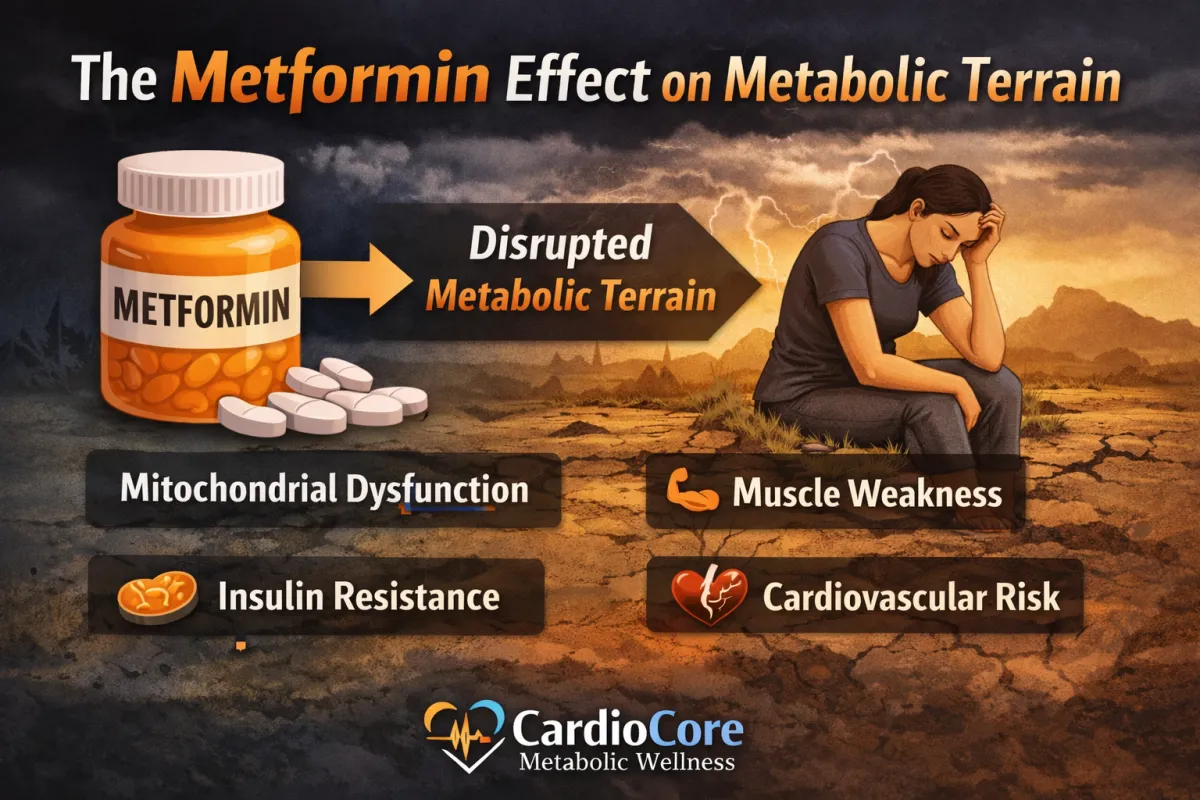
Why Metformin-Centered Therapy Is Failing Heart Patients — and What Really Restores Metabolic Health
Why Metformin-Centered Therapy Has Failed in Cardiometabolic Disease - and Why Restoring the Metabolic Terrain Is the Key to Energy and Heart Health
"Moving Beyond Glucose Numbers to Mitochondria, Muscle, Hormones, and Vascular Biology"
Acknowledgement and Purpose of this Article
This article is written for anyone who has been told they have prediabetes, borderline diabetes, or diabetes, and who has been taught to focus almost entirely on blood sugar numbers while feeling increasingly tired, weaker, and less like themselves. For many people, elevated glucose is not the beginning of the disease process, but a late and visible sign of long-standing insulin resistance and metabolic dysfunction that has already been affecting muscles, blood vessels, the heart, and the brain for years.
If some clinicians disagree with the mechanisms discussed here, they should be prepared to explain, using evidence rather than tradition, why mitochondrial dysfunction, fat accumulation in organs, chronic inflammation, hormonal disruption, and impaired cellular fuel use should not be considered central drivers of cardiometabolic disease. The medical literature increasingly shows that correcting glucose alone does not reliably restore energy, improve physical function, or adequately reduce cardiovascular risk.
Too often, clinical care is shaped by habit and protocol instead of by evolving understanding of human physiology. This clinical inertia does not serve patients who continue to struggle with fatigue, weight gain, declining exercise capacity, and vascular risk despite having “acceptable” lab values. This article is offered as a call to rethink what we measure, what we treat, and whether our current strategies truly reflect the biology that determines long-term health and resilience.
John Sciales, M.D.
Director, CardioCore Metabolic Wellness Center
When Everything Starts to Go Wrong — Quietly
For many people, the story begins quietly. A routine blood test shows slightly high blood sugar, rising triglycerides, or cholesterol that is no longer “perfect.” Possibly it’s only recognized and addressed after developing heart disease. Maybe you were once very active, even athletic, but now you notice stubborn belly fat, slower recovery, and less stamina. Or you are a busy professional who feels mentally foggy and exhausted by the end of the day. Some people are placed on GLP-1 medications, lose weight quickly, then regain it, often with less muscle and more fatigue than before. Others are told they already have plaque in their arteries or early heart disease and are shocked because they “felt fine” not long ago.
In many of these situations, the next step is often automatic: start metformin, lower the blood sugar, and move on. For decades, this has been standard practice. Metformin is inexpensive, widely available, and it lowers glucose in large population studies. Because of this, it became the default starting medication for diabetes and prediabetes across much of the world. But lowering blood sugar is not the same as restoring health, and many people sense this when they say, “My numbers look better, but I don’t feel better.”
Why Diabetes and Heart Disease Are Really Energy Diseases
The problem is that diabetes and heart disease are not primarily diseases of sugar. They are diseases of energy metabolism, insulin resistance, inflammation, and mitochondrial dysfunction [1–3]. Long before blood sugars become abnormal, cells in muscle, liver, heart, and blood vessels begin to lose their ability to use fuel efficiently. Fat begins to accumulate inside organs where it does not belong, damaging cellular machinery and increasing oxidative stress.
This process, often called lipotoxicity, interferes with insulin signaling and disrupts mitochondrial energy production [4–7]. When mitochondria struggle, tissues cannot generate enough ATP, the molecule that powers every cellular process. People experience this as fatigue, weakness, shortness of breath with exertion, and slower recovery from physical activity. Yet none of this is measured by routine glucose testing.
What Metformin Really Does — And What It Does Not Do
Metformin lowers blood sugar primarily by acting on the liver, not on the muscles where glucose is supposed to be used to make energy. Mechanistically, it inhibits mitochondrial complex I in liver cells, which reduces local ATP production and increases the AMP-to-ATP ratio. This activates AMPK, a cellular energy-sensing pathway that suppresses energy-intensive processes such as gluconeogenesis by turning off gluconeogenic genes [2,3,8].
When liver cells sense this relative energy deficit, they respond by producing and releasing less glucose into the bloodstream. In other words, blood sugar goes down mainly because the body is making less glucose, not because muscles and other tissues are using glucose more effectively. Peripheral improvements in insulin sensitivity are modest and variable, and in many patients metformin does not restore efficient glucose uptake or oxidation in muscle during activity.
So while metformin improves glucose numbers, it does not correct the underlying problem of impaired fuel utilization in muscle and heart.
Lower Numbers Do Not Mean Better Energy Biology
Let me say this clearly, because this is where most people have never been told the truth:
Metformin lowers blood sugar by telling the body to stop making sugar, not by helping the body use sugar better.
Or said another way: it improves the number on the lab report, but it does not fix the engine that is supposed to burn the fuel.
And here is the third way to understand it: blood sugar falls not because cellular metabolism has become more efficient, but because glucose supply from the liver has been reduced while underlying fuel-use defects remain.
This is not about total calorie burn or resting metabolic rate. It is about the efficiency of energy delivery during times of demand, exercise, recovery, and cognitive work.
Treating Lab Values Instead of Treating Biology
This exposes a deeper problem in how metabolic disease is treated. Most of the medical system is built around correcting lab numbers, not restoring the metabolic terrain that actually drives health and energy. Medications are prescribed to move sugar and cholesterol on a chart, but clinicians rarely measure how well cells are producing energy, how muscles are handling fuel, or how inflamed and stressed the body has become.
Then, at the same time patients are placed on metformin, they are told, “You need to exercise more and lose weight.” That advice is biologically sound, but it can conflict with giving a drug that does not restore fuel utilization in muscle and may increase perceived exertion during activity in some patients. In effect, people are encouraged to move more without addressing the cellular limitations that make movement difficult in the first place.
When the Body Is Forced Into Less Efficient Fuel Use
At the same time, muscles and other organs that already struggle to use glucose effectively remain more dependent on fat for fuel. Fat contains more stored energy, but it requires more oxygen per unit of ATP and generates more reactive oxygen species inside mitochondria [6,9].
In patients with limited mitochondrial reserve, this can translate into greater fatigue, poorer exercise tolerance, and slower recovery. This is especially noticeable in older adults and former athletes who depend on efficient oxidative metabolism to maintain strength and endurance. That is why many people say, “My sugar looks better, but I feel more tired.”
Under healthy conditions, glucose is the most oxygen-efficient fuel mitochondria can use. The heart and exercising muscle naturally prefer glucose when available because it produces more ATP per unit of oxygen and with less oxidative stress. That is why during physical and mental stress, healthy metabolism shifts toward glucose utilization [10,11]. Fat metabolism is normal and appropriate during fasting and low-intensity activity, but when insulin resistance or mitochondrial inhibition limits glucose use during higher demand, energy production becomes less efficient and more stressful for the cell.
The Brain, Stress Hormones, and Metabolic Burnout
This energy stress does not stay limited to muscles and the heart. When cells throughout the body struggle to generate ATP, the brain activates the stress response. Cortisol and adrenaline rise to mobilize fuel and maintain blood glucose. In the short term, this supports survival. But when this response becomes chronic, it worsens insulin resistance, increases inflammation, and interferes with mitochondrial repair [12,13].
Over time, neuroinflammation develops, neurotransmitter balance is disrupted, and cerebral blood flow regulation becomes less efficient. Patients experience brain fog, anxiety, irritability, memory problems, and low mood, symptoms often attributed to aging or stress, but which reflect metabolic dysfunction affecting brain physiology [14,15].
Sleep: The First Casualty of Metabolic Dysfunction
Sleep is often one of the first systems to deteriorate. Elevated evening cortisol disrupts circadian rhythms, making sleep fragmented and non-restorative. Poor sleep then worsens insulin resistance, raises blood pressure, increases appetite for fast carbohydrates, and impairs mitochondrial recovery [16]. A vicious cycle develops: metabolic dysfunction disrupts sleep, and poor sleep accelerates metabolic disease.
Stress, Plaque Instability, and Hidden Cardiovascular Risk
Chronic stress hormones directly injure the cardiovascular system. Elevated cortisol and adrenaline increase heart rate, raise blood pressure, promote vascular stiffness, and impair nitric oxide signaling [17,18]. Stress also increases platelet activation and inflammatory activity within plaque, making plaques more vulnerable to rupture [19]. Thus, the same stress physiology causing fatigue and brain fog also increases heart attack and stroke risk, even when cholesterol and glucose appear controlled.
Testosterone, Muscle Loss, and Male Metabolic Decline
In men, chronic stress also suppresses testosterone. High cortisol shifts hormonal balance away from tissue repair and toward survival. Abdominal fat further increases conversion of testosterone to estrogen. The result is muscle loss, worsening insulin resistance, fatigue, depression, and declining cardiovascular performance. Low testosterone is not simply an aging issue; it is tightly linked to metabolic dysfunction and cardiovascular risk.
The Heart Is an Energy Organ, Not Just a Pump
Like the brain, the heart stores very little usable energy and depends on continuous fuel and oxygen delivery. When insulin resistance and mitochondrial dysfunction impair substrate utilization, the heart can become energy-starved even with normal blood flow [20]. This explains why many patients develop exertional intolerance and HFpEF long before major blockages are present [21–23].
Why Glucose Control Alone Does Not Protect the Heart
Lowering glucose without restoring cellular fuel utilization does not improve myocardial or cerebral energy delivery. Numbers improve while physiology continues to decline.
GLP-1 Drugs, Muscle Loss, and Fragile Metabolism
GLP-1 drugs reduce appetite but do not directly restore muscle insulin sensitivity or mitochondrial efficiency. Without resistance training and adequate protein, muscle mass declines, worsening long-term metabolic flexibility [24,25]. When therapy stops, weight often returns while metabolic capacity remains impaired.
Cardiometabolic Disease Is a Terrain Failure, Not an Organ Failure
True cardiometabolic disease reflects breakdown of the metabolic terrain: mitochondrial health, muscle mass, inflammation, hormonal balance, autonomic tone, nutrient status, and gut microbiome. When this terrain is damaged, no single drug can restore balance.
Medications That Restore Biology, Not Just Numbers
Pioglitazone activates PPAR-gamma, improving insulin sensitivity, lipid partitioning, adiponectin levels, and inflammatory signaling [26,27]. It reduces lipotoxic stress and improves metabolic flexibility rather than suppressing energy pathways.
Clinical trials (CHICAGO, PERISCOPE, PROactive, IRIS) demonstrate reduced plaque progression and fewer cardiovascular events independent of glucose lowering [28–30].
Icosapent ethyl reduces inflammation and stabilizes plaque, lowering cardiovascular events [31,32].
Exercise as Mitochondrial Medicine — And the Medical Contradiction
Exercise stimulates mitochondrial biogenesis, improves insulin sensitivity, enhances nitric oxide signaling, and reduces inflammation [10,11,33]. It is one of the most powerful metabolic therapies available.
Yet many patients are prescribed medications that do not restore muscle fuel utilization and may blunt some training adaptations, particularly in older and insulin-resistant individuals. When patients report higher perceived exertion or slower recovery after medication changes, it should prompt reassessment of therapy, not dismissal of symptoms.
Why Lifestyle Advice Fails When Biology Is Ignored
This is not about willpower. You cannot prescribe exercise while ignoring the biology that allows exercise to be effective. True cardiometabolic care must support movement physiologically, not just recommend it verbally.
Hormones, Gut Health, and Hidden Drivers
Stress hormones, thyroid function, sex hormones, and microbiome health all influence insulin sensitivity, vascular biology, and mitochondrial repair [34,35]. Ignoring these systems limits recovery.
The CardioCore Difference: Precision Evidence for Restoring Metabolic Health
Because cardiometabolic disease arises from interacting systems, recovery requires precision evaluation: genetics, metabolic function, hormones, inflammation, and microbiome status.
Final Thought
Being healthy is not an accident.
It is the result of treating the right biology, in the right person, at the right time.
John Sciales, M.D.
Director, CardioCore Metabolic Wellness Center
“Getting to the Core… the Path to Wellness — where being Healthy is Not an Accident”
At CardioCore, we do not manage numbers... We understand and treat the Biology behind the Metabolic Terrain
Click here to book a discovery call
Click here to join our private community
Click here to speak with our CardioMetabolic virtual assistant
References
DeFronzo RA. From the triumvirate to the ominous octet. Diabetes. 2009.
Foretz M et al. Metformin: mechanisms of action. Cell Metab. 2014.
Rena G et al. Mechanisms of action of metformin. Diabetologia. 2017.
Shulman GI. Ectopic fat and insulin resistance. . 2000.
Petersen KF, Shulman GI. Pathogenesis of insulin resistance. Am J Med. 2006.
Lowell BB, Shulman GI. Mitochondrial dysfunction and insulin resistance. Science. 2005.
Unger RH, Orci L. Lipotoxic diseases. Annu Rev Med. 2001.
Owen MR et al. Metformin inhibits mitochondrial complex I. Biochem J. 2000.
Anderson EJ et al. Mitochondrial oxidative stress in metabolic disease. . 2009.
Holloszy JO. Exercise and mitochondrial biogenesis. . 2008.
Hawley JA et al. Exercise and insulin sensitivity. . 2014.
Kiecolt-Glaser JK et al. Stress and inflammation. . 2015.
Rosmond R. Stress and metabolic syndrome. Ann Med. 2005.
Craft S. Insulin resistance and Alzheimer’s disease. Arch Neurol. 2009.
Yaffe K et al. Metabolic syndrome and cognitive decline. JAMA. 2004.
Spiegel K et al. Sleep loss and insulin resistance. . 1999.
Brook RD et al. Stress and vascular function. Hypertension. 2010.
Vita JA, Keaney JF. Endothelial dysfunction. Circulation. 2002.
Libby P. Inflammation in atherosclerosis. . 2002.
Taegtmeyer H et al. Energy metabolism in the heart. Circulation. 2016
Paulus WJ, Tschope C. HFpEF as metabolic disease. . 2013.
Shah SJ et al. Metabolic risk and HFpEF. Circulation. 2016.
Murthy VL et al. Myocardial metabolism in HFpEF. . 2014.
Srikanthan P, Karlamangla AS. Muscle mass and insulin sensitivity. Am J Med. 2011.
Wolfe RR. Protein and muscle metabolism. Am J Clin Nutr. 2012.
Rangwala SM, Lazar MA. PPAR-gamma in metabolism. Annu Rev Nutr. 2004.
Tontonoz P, Spiegelman BM. Fat and insulin sensitivity. Nature. 2008.
Nissen SE et al. PERISCOPE trial. JAMA. 2008.
Dormandy JA et al. PROactive trial. Lancet. 2005.
Kernan WN et al. IRIS trial. NEJM. 2016.
Bhatt DL et al. REDUCE-IT trial. NEJM. 2019.
Budoff MJ et al. EVAPORATE trial. Eur Heart J. 2020.
Booth FW et al. Chronic disease prevention by exercise. . 2012.
Cani PD et al. Gut microbiota and metabolic disease. . 2008.
Turnbaugh PJ et al. Microbiome and obesity. Nature. 2006
